
Major Lancet Study Finds No Link Between Tylenol and Autism
By Annette Pinder
For years, expectant parents have encountered confusing and often alarming headlines suggesting a possible link between acetaminophen, commonly known as Tylenol, and autism. A significant new study published in The Lancet Obstetrics & Gynaecology in January 2026 provides clarity and reassurance.
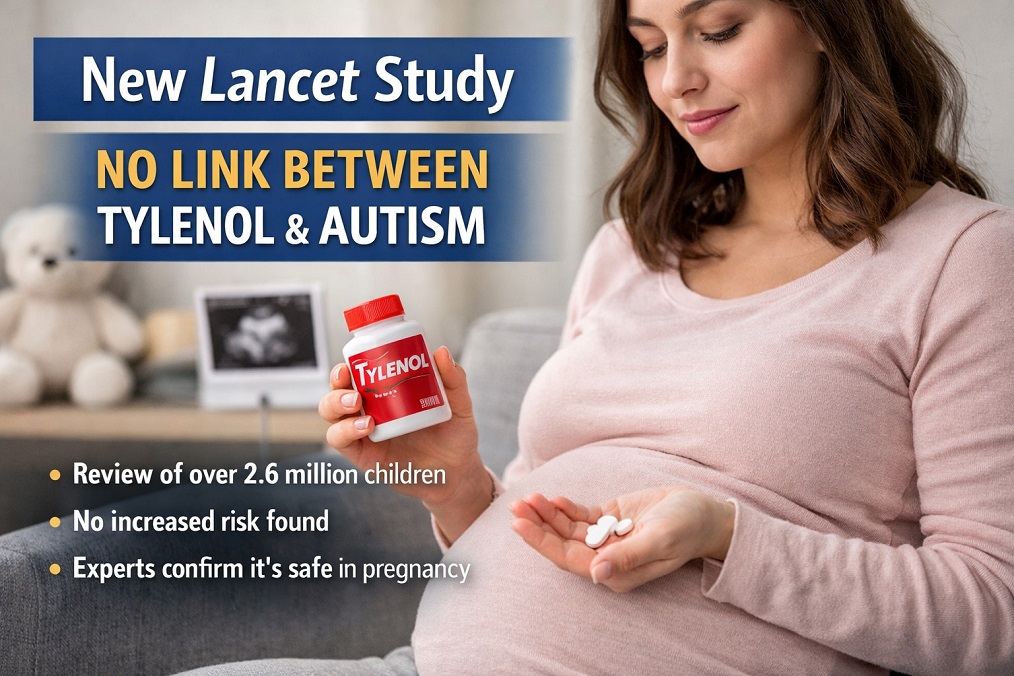
A review of 43 studies involving 2.6 million children on acetaminophen use during pregnancy found no evidence linking Tylenol to autism or other neurodevelopmental disorders. The analysis emphasized higher-quality study designs, including sibling comparisons that account for shared genetics and environmental factors. The authors noted that earlier studies raising concerns were likely influenced by confounding factors, such as maternal infections or fevers, which are common reasons many pregnant women take acetaminophen.
The new review comes after President Trump told pregnant women to “tough it out” and “fight like hell” not to take Tylenol because the painkiller could cause autism in children. The message was delivered by President Trump during a news conference supporting Health Secretary Robert F. Kennedy Jr.’s efforts to link rising autism rates among children to unproven risks of acetaminophen and long-discredited theories that vaccines cause autism.
Major medical organizations worldwide, including the American College of Obstetricians and Gynecologists and the Society for Maternal-Fetal Medicine, state that acetaminophen is safe during pregnancy and emphasize that untreated fever or severe pain can pose real risks to both mother and baby. Experts hope this landmark Lancet review will reassure families and refocus discussions on evidence-based advice.
Researchers emphasize that pregnant patients should always consult their healthcare provider, use the lowest effective dose, and limit medication duration when necessary. Clear communication and responsible use are essential to protect maternal and fetal health and to prevent unnecessary fear caused by misinformation.