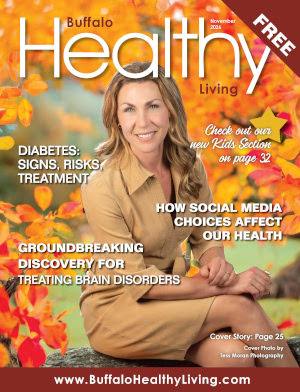
A Storied Life: Our Cover
Why Talking About Death Can Help Us Live Better
By Annette Pinder
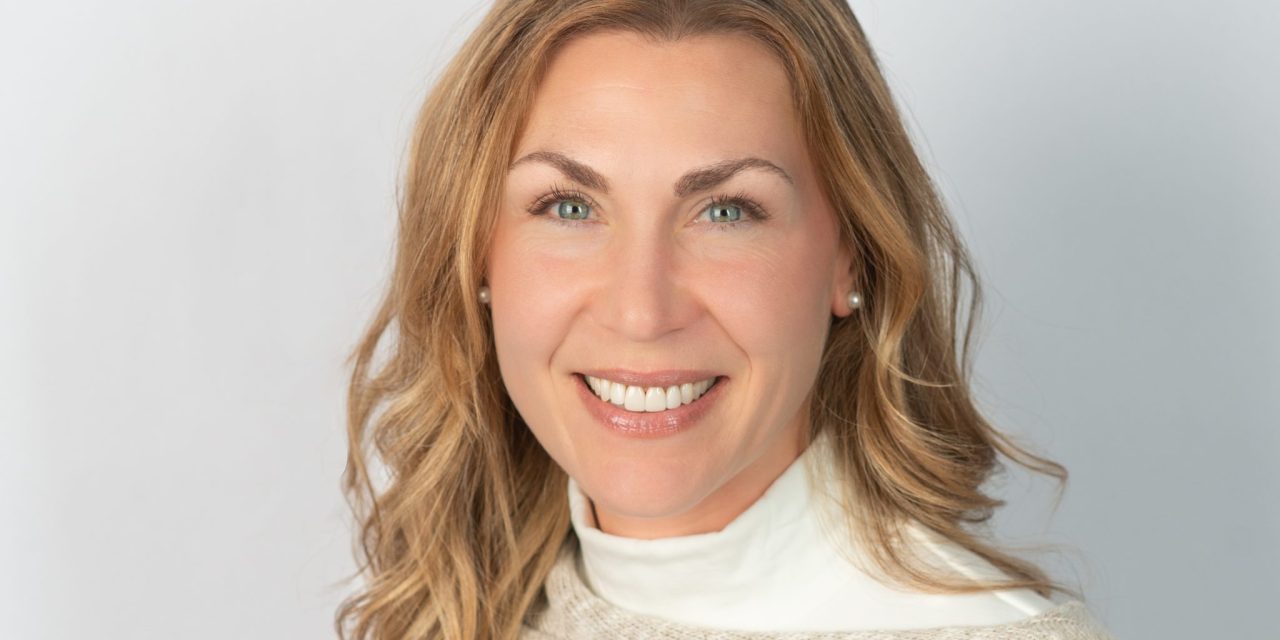
We all know that life ends. Yet most of us would rather not talk about it. Amber Sastry believes that learning to face mortality can actually help us live more fully—and connect more deeply with the people around us.
Amber is Founding Director of A Storied Life, a Western New York nonprofit devoted to bringing greater connection and peace to living and dying. Through free community gatherings, story circles, and educational programs, she creates spaces where people can talk freely about subjects often considered awkward or off-limits: aging, illness, death, grief, advance care planning, legacy, and what gives life meaning.
But A Storied Life is not simply about preparing to die. It’s also about learning how to live. “How many of us live with intention?” Amber asks. “How many of us know the art of listening to experience better relationships?” Her approach centers on “storylistening”— giving another person our careful attention without interrupting, fixing, advising, or trying to rescue them. “The gift of our careful attention has the potential to deepen our connection with others,” she says.
Her programs also help people explore practical matters they may have postponed, including choosing a health care proxy and learning about living wills, DNR orders, hospice, palliative care, funeral options, and other local resources. Just as important are the less tangible questions: What are we grateful for? What do we regret? Is there someone we need to forgive — or ask to forgive us? How do we want to be remembered? If we knew we had one week to live, what unfinished business would keep us awake at night?
Amber’s path to this work has been anything but conventional. Raised in North Tonawanda, she earned a psychology degree from the University at Buffalo, worked as a school psychologist, and became a lab and research assistant at UB’s Center for Children and Families. She later moved to Boston and worked in biotechnology and pharmaceutical research. Wanting to understand how health decisions are made on a larger scale, Amber earned a Master of Public Policy degree in Global Health from UCLA. Her work in Los Angeles eventually took her to West Africa, where she worked in an HIV/AIDS clinic and hospice unit, wrote grant proposals, contributed to work connected with the President’s Emergency Plan for AIDS Relief (PEPFAR), and cared for people facing serious illness.
One patient, Renaldo, who had HIV, contracted leukemia. He hoped that a bone marrow transplant would save him, but it did not. Shortly before his death, Renaldo told Amber that what he wanted most was his mother’s chicken curry. She prepared it and made sure he had it for dinner. That experience stayed with her. “It’s a paradox,” Amber says. “Despite researchers working tirelessly to find ways to save lives and prevent infections, there often comes a day when no doctor and no miracle can save us.” She came to understand that sometimes the most meaningful thing we can offer is not another solution, but our presence.
The unexpected death of Amber’s beloved grandmother reinforced that lesson. Her family, hoping to protect Amber, did not tell her that her grandmother had lung cancer. Amber believed the reassuring words that she was getting better. Then her grandmother went to the hospital, and Amber never saw her again. “I realized how important it was not to be blinded by hope,” she says.
Today, Amber brings those experiences together through A Storied Life. She believes children, healthy adults, caregivers, and older adults can all benefit from understanding themselves more deeply, learning what matters to them, and preparing for illness or an unexpected event before a crisis occurs. Her gatherings take place at libraries, community centers, parks, and other welcoming spaces throughout Western New York. Participants learn, share stories, listen to one another, and often discover that talking about mortality is not nearly as frightening as they imagined. Instead, it can bring gratitude, clarity, and a renewed appreciation for life.
After all, grief exists because we have loved. Preparing for death does not mean giving up on life. And acknowledging that our time is finite may be one of the most powerful reminders to stop postponing the conversations, relationships, and experiences that matter. Everyone, Amber believes, has a story—and a storied life. The question is how we choose to live the chapters still ahead.
A Storied Life’s programs are free. On November 21, the organization will host its annual Friendsgiving Potluck at the Audubon Branch of the Amherst Public Library. Learn more about programs, events, and local resources at astoriedlife.org.