
Cultivating Agricultural Innovation
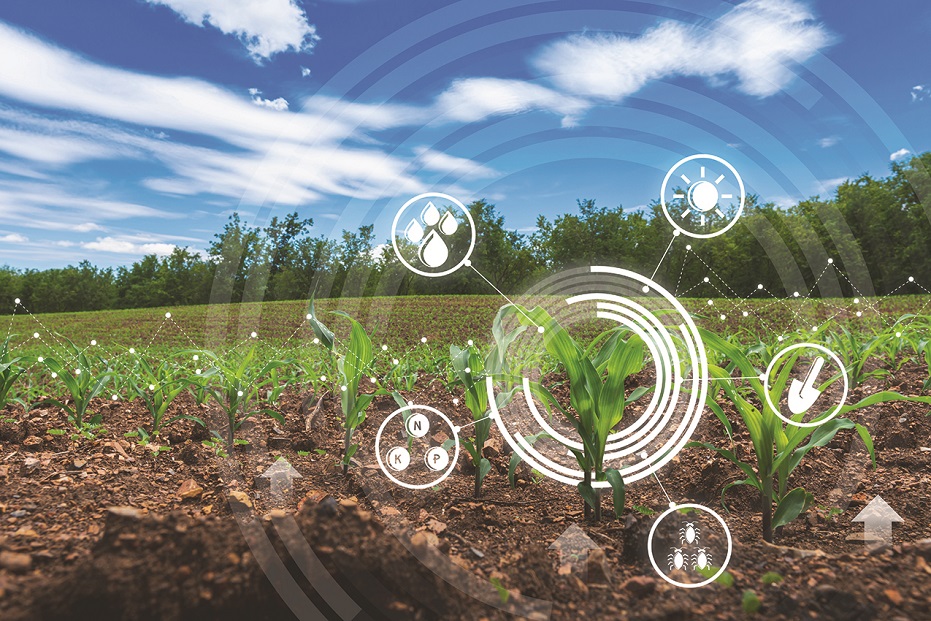
The agricultural sector is changing thanks to new technology driven by a growing global population and climate change pressures. The United Nations forecasts a worldwide population of 9.7 billion by 2050. The agricultural sector must find ways to meet the needs of that increasing population. These challenges are being addressed by advancing technologies that help farmers boost productivity while also lowering their environmental impact.
Technological advancements are fostering innovation in the agricultural sector, and these are some of the options farmers are exploring.
The Internet of Things (IoT)
IoT is a vast network of objects embedded with sensors, software, and connectivity. Farm operations can utilize affordable, durable sensors spread across fields to monitor soil moisture, temperature, and nutrient levels in real time. These sensors enable “variable rate application” of water and fertilizers, ensuring resources are used only where they are needed. A report by Grand View Research projects that the smart agriculture market will grow at a compound annual growth rate of 10.8% through 2030.
Robotics and Automation
Labor shortages have increased reliance on robotics and autonomous machinery to manage farm tasks. Modern tractors can be equipped with GPS and LiDAR (light detection and ranging) systems to enable autonomous operation. Optimized pathfinding helps reduce soil compaction and other adverse effects. Specialized robots can perform selective harvesting, according to the Journal of Field Robotics. Fruit pickers can assess ripeness prior to harvesting, thereby minimizing waste. Unmanned aerial vehicles (UAVs), or drones, can provide multispectral imagery that enables farmers to detect crop stress before it becomes visible to the naked eye.
Biotechnology
Farming is increasingly being developed in laboratories before crops even sprout in the fields. Biotechnology is a key part of agricultural progress. Gene-editing tools like CRISPR-Cas9 can be used to create crop varieties that are more resistant to saline soil conditions and drought. Research published in Nature Communications reports that bioengineered crops could increase yields by up to 20% even under suboptimal environmental conditions. This accelerates the development of traits that help plants thrive.
Vertical Farming
Vertical farming enables facilities to produce more food per square foot than traditional methods, according to the Association for Vertical Farming. When combined with Controlled Environment Agriculture, which uses hydroponic or aeroponic systems, facilities gain greater control over conditions that can affect food sources.
The utilization of different technologies across the agricultural sector is driving innovation and production.