
What is Oral Cancer, and Who is At Risk?
ECMC’s Oral Oncology Maxillofacial Prosthetics Clinic Saves Lives
By Jennifer Frustino, DDS, PhD
More than 60,000 cases of oral and oropharyngeal cancer are diagnosed yearly in the U.S., most often in people over age 40. Part of a larger group of cancers called head and neck cancers, oral cancer develops in squamous cells in the mouth, tongue, and lips. Oropharyngeal cancers develop in the base of the tongue, tonsils, and throat, and are typically discovered after they’ve spread to lymph nodes of the neck. Since early detection is key to surviving head and neck cancer, regular dental checkups are important.
Risk Factors.
Tobacco use is the biggest risk factor for oral cancer, including smoking cigarettes, cigars, pipes, and using chewing tobacco. Consuming large amounts of alcohol and tobacco presents an even greater risk. Other risk factors are chronic facial sun exposure, a previous diagnosis of oral cancer, a family history of oral or other types of cancer, a weakened immune system, poor nutrition, genetic syndromes, age, and being male. Human papillomavirus (HPV) infection is the leading risk factor for cancer in the back of the mouth or throat. HPV is very common, and most people don’t even know they have been infected.
Signs and Symptoms.
Signs and symptoms of oral cancer include a mouth or lip sore that won’t heal, a mouth mass or growth; mouth bleeding; loose teeth; pain or difficulty swallowing; a change in how dentures or teeth fit together; a chronic earache; dramatic weight loss; lower lip, face, neck, or chin numbness; red and/or white patches in the mouth or on the lips; a sore throat; jaw pain or stiffness; and tongue pain. Additional signs of throat cancer include a lump in the neck or throat, a persistent cough or sore throat, and hoarseness or other voice changes. Some of these symptoms may be due to other conditions. Visiting your dentist or doctor is particularly important if you have one or more symptoms that do not go away.
Your dental visit.
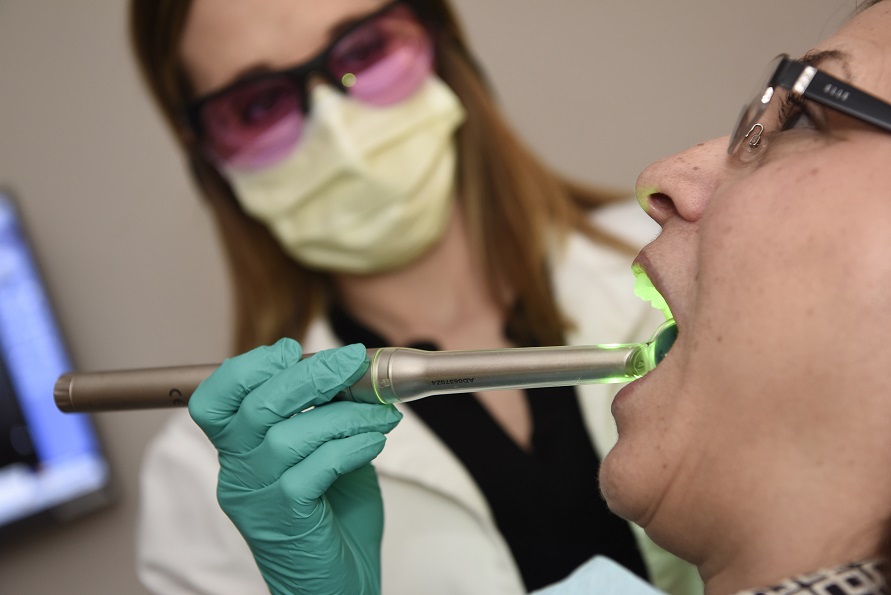
To evaluate your symptoms, your dentist will examine the roof and floor of your mouth, the back of your throat, tongue, gums, cheeks, and lymph nodes in your neck. If your dentist does not find a reason for your symptoms, you may be referred to an ear, nose, and throat (ENT) specialist or dental oncologist. If your doctor finds tumors, growths, or suspicious lesions, a tissue biopsy will be performed to determine whether cancerous cells are present. Other tests may include X-rays, CT scans, PET scans, MRIs, and endoscopies.
Oral cancer requires specialty prevention, diagnosis, treatment, and management. Avoid tobacco products and heavy alcohol use. Talk to your physician, pharmacist, or dentist about the HPV vaccine, especially for children starting at age 9 and for adults up to age 45. Within the Center for Oncology Care at Erie County Medical Center (ECMC), the ECMC dental team diagnoses and treats patients facing these conditions, and the oral complications that can accompany cancer care. The team also offers specialty maxillofacial prosthetic rehabilitation and reconstruction to patients with defects or disabilities due to disease, trauma, or congenital anomalies. Also offered are specialized oral prosthetics to replace missing areas of bone or tissue and restore functions such as swallowing, speech, and chewing. Sometimes a prosthesis for the face or body becomes necessary for cosmetic and psychosocial reasons. The overall goal of maxillofacial prosthetic treatment is to improve the patient’s quality of life.
Jennifer Frustino, DDS, PhD, is ECMC’s Associate Chief of Dentistry and the Director of Oncology Research. To learn more about ECMC’s Oral Oncology & Maxillofacial Prosthetics Clinic, call 716-898-1461 or visit www.ecmc.edu.