
Unleash Your Inner Athlete Safely with the Excelsior Edge
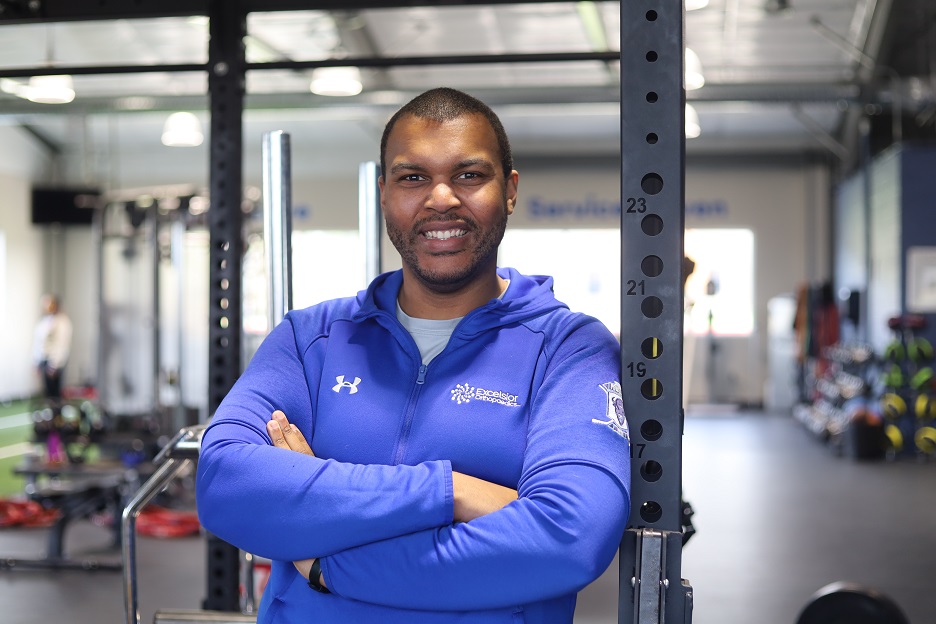
By Kendall Marshall, DAT, ATC, CSCS
Injuries can end an athlete’s season faster than any losing streak, and those that occur at the professional level often mirror what happens in amateur sports. While dramatic injuries like ACL or Achilles tears make headlines, overuse injuries are typically more common and preventable.
ACL injuries, for which recovery takes 9 to 12 months, are among the most serious risks for athletes who cut, pivot, and change direction quickly. Data confirms that NFL players have a 1.9% chance of tearing their ACL, that female athletes face a 1.5 times higher risk, and young football, soccer, and lacrosse players are also significantly affected. Contributing factors, some of which are controllable and others not, include field surface, conditioning, and hormonal influences.
Achilles tendon injuries frequently happen during explosive movements like sprinting or jumping. Whether treated surgically or conservatively, returning to play can take anywhere from 6 to 12 months. Achilles ruptures have risen significantly in the NBA, from 1.4 cases in 1990 to 8 in the most recent season. Athletes aged 30 to 50 are at the greatest risk, partly because of natural changes in tendon elasticity that occur with age.
Chronic injuries such as patellar tendinopathy, shoulder impingement, and medial epicondylitis affect all athletes, especially as they age or increase training volume. College athletes sustain overuse injuries about 3 times more often than high school athletes. Poor conditioning, inadequate strength training, under-fueling, and excessive training hours are contributing factors, particularly among kids and female athletes. In addition to benching athletes, these injuries often impact their mental health.
Many professional sports injuries originate from habits formed in childhood. Early specialization, high training loads, and insufficient rest increase the risk of long-term problems for young athletes. Coaches and parents can help by encouraging multisport participation, ensuring adequate recovery time, and limiting weekly training hours. For example, a 14-year-old should not participate in sports for more than 14 hours weekly. Two rest days each week, not necessarily consecutive, are also crucial for rebuilding and recovery.
A key difference between youth and professional sports is access to structured strength and conditioning. Year-round training programs that address strength, power, mobility, and endurance significantly help reduce injury rates. Athletes gain the most from increasing gym time during the off-season and maintaining a lighter but steady program during competition periods.
At Excelsior Sports Performance, we focus on helping athletes train smarter, perform better, and maintain good health. Our youth programs utilize injury data from partner high schools and are supported by the expertise of physicians, athletic trainers, physical therapists, and strength and conditioning specialists. This fully integrated approach, known as the Excelsior Edge, gives athletes the tools they need to succeed safely.
Whether you’re recovering from an injury or looking to boost your performance, we invite you to visit our Elma performance center for a free trial session. Discover how intentional, evidence-based training can help you unlock your inner athlete. Learn more at https://www.excelsiorortho.com/location/elma-sports-performance, or call 716-383-2645.
Kendall Marshall, DAT, ATC, CSCS, is the Sports Performance Coordinator at Excelsior Orthopaedics.