New Vaccine Schedule Sparks Concerns for Children’s Health
By Annette Pinder
Dr. Tom Frieden, President and CEO of Resolve to Save Lives, a former Commissioner of the U.S. Centers for Disease Control and Prevention, and a former NYC Health Commissioner, recently discussed the changes to the U.S. Department of Health and Human Services (HHS) childhood immunization schedules. He stated that these changes represent one of the most significant public health policy shifts in decades that could potentially be harmful. Dr. Frieden also says that these changes by the federal government are a step backward for all children’s health in the United States.
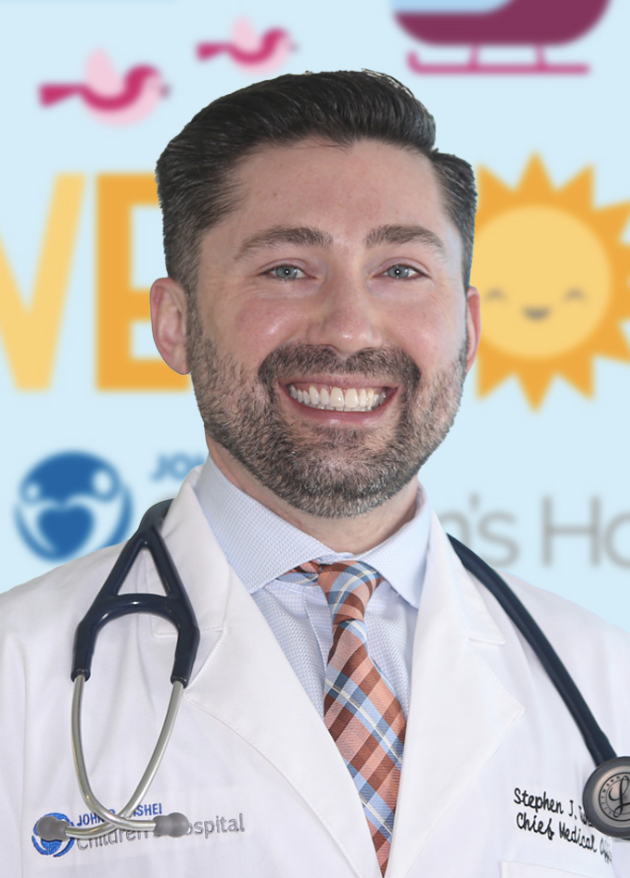 Dr. Stephen J. Turkovich, M.D., president of Golisano Children’s Hospital of Buffalo, shares concerns that weakening universal recommendations could lower vaccination rates, create confusion among parents and healthcare providers, and ultimately result in more preventable childhood illnesses, hospitalizations, disabilities, and deaths. The recent changes to the vaccine schedule were motivated by the U.S. administration’s goal to align its guidelines with those of Denmark, a small, largely homogeneous country of about 6 million people that is 90% White, compared to the U.S., which has a diverse population of around 340 million.
“Access to healthcare in Denmark is much easier with its universal healthcare system, and the prevalence and incidence of infectious diseases within a country are key factors in determining which vaccines are recommended. For example, other countries vaccinate against tuberculosis, whereas the U.S. does not. Also, some countries choose not to recommend universal vaccines for certain diseases because they are too costly, not because they are unsafe or ineffective,” says Dr. Turkovich.
While scientific evidence supporting childhood vaccination has not changed, the administration has replaced longstanding universal vaccine recommendations with “shared clinical decision-making” or “risk-based” approaches that lack evidence.
Shared Clinical Decision-Making for Six Vaccines.
Parents and clinicians are encouraged to decide together, rather than follow a clear recommendation for Influenza, COVID-19, Rotavirus, Meningococcal disease (certain types), Hepatitis A, and Hepatitis B vaccines. The issue is that this approach is only suitable when the evidence is uncertain. In fact, the benefits of these vaccines are well-established. Suddenly, making these vaccines a choice alone causes unnecessary hesitation, delays, and illness.
Risk-Based Recommendations for Four Vaccines.
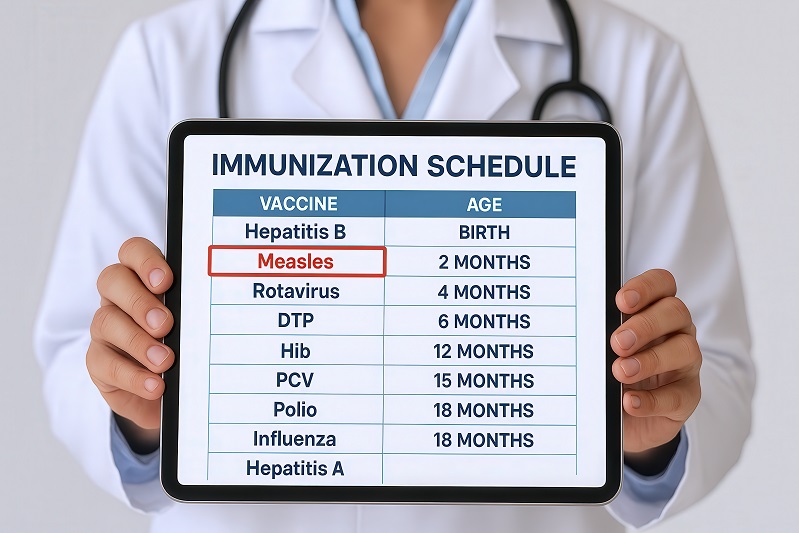
New guidelines approve only RSV, meningococcal disease (ACWY types), and hepatitis A for children at higher risk, and eliminate hepatitis B at birth entirely.
“Such risk-based approaches have been attempted before without success, mainly because many at-risk children are not identified in time. Ending universal hepatitis B vaccination at birth, for instance, risks lifelong infection in infants whose mothers were not tested or who became infected later. Shared decision-making will lead to lower vaccination rates, increase administrative work for pediatricians and pharmacists, cause more confusion for parents and schools, and raise the risks of flu, hepatitis, meningitis, rotavirus, and other preventable disease outbreaks,” says Dr. Turkovich.
Recent data confirms 3 deaths in 2025-2026 from measles, 13 from whooping cough, and a record 289 pediatric deaths last year from influenza. Additionally, vaccine-derived poliovirus has been detected in U.S. wastewater in New York, indicating potential community spread from imported cases and highlighting risks in areas with low vaccination rates. However, RSV vaccines have reduced hospitalizations in babies by 70-80% both nationwide and here in WNY. The Rotavirus vaccine prevents 50,000 hospitalizations each year. Hepatitis B infections have decreased by 99% since 1991, when the universal birth dose was first introduced. Last year, 89% of children who died of the flu were not fully vaccinated, and nearly half had no other medical problems.
Fortunately, vaccine recommendations are ultimately decided by the states, and not the federal government. Thus, in New York and Western New York, children must follow the schedule set by the New York State Department of Health, the American Academy of Pediatrics (AAP), and the American Academy of Family Physicians (AAFP). For a list of evidence-based immunization schedules that you can feel confident in following for your children, visit https://downloads.aap.org/AAP/PDF/AAP-Immunization-Schedule.pdf.
Dr. Turkovich emphasizes that evidence shows vaccines remain safe, effective, and necessary. They will also continue to be covered at no cost to consumers through private insurance, Medicaid, and the Vaccines for Children (VFC) Program. He adds, “Universal vaccination is the most effective and equitable way to protect children and others with weakened immune systems due to chronic illnesses, cancer treatments, immunodeficiencies, and normal aging.”
Dr. Turkovich will discuss this important topic on WBBZ-TV on Wednesday, February 18, at 8:00 pm, and on Saturday, February 21, at noon. See page 12 for more information.