Is Your Baby’s Food Full of Microplastics?
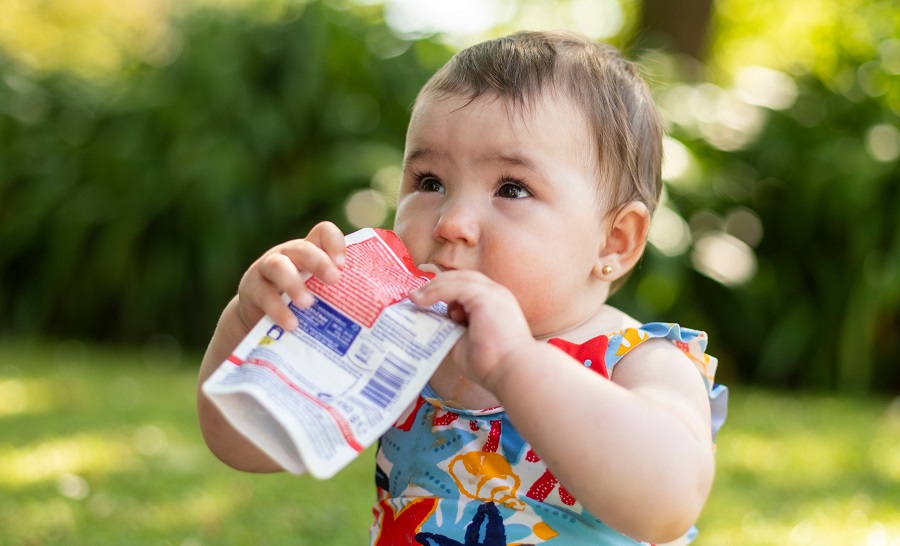
A new investigation has found microplastics in baby food pouches sold by some of the world’s biggest brands — including one labeled organic — is raising questions about a packaging format that has overtaken baby food aisles.
Research commissioned by Greenpeace International tested two leading baby food brands and estimated that each pouch contained thousands of microplastics, ranging from more than 5,000 in one brand to over 11,000 in the other.
“Parents trust these brands to ensure their babies’ first bites of food are free from microplastic contamination. Unfortunately, this research shows that even the most trusted brands can’t guarantee that,” says Sybil Bullock, a senior campaigner at Greenpeace USA.
The findings, detailed in a new report titled “Tiny Plastics, Big Problem: The Hidden Risks of Baby Food Plastic Pouches,” point to polyethylene, the lining of the pouches, as a likely source of microplastics. Researchers also detected a range of chemicals in both the packaging and the food, including a known harmful endocrine-disrupting chemical in one yogurt product.
This study is among the first to assess the presence of microplastics and plastic chemicals that could be released from spout pouches into baby food. It adds to a rapidly expanding body of evidence on how these tiny plastic particles enter the human body — a particular concern for infants, whose organs and nervous systems are rapidly developing. Even small exposures during these formative months can have lifelong effects on growth, neurological development, metabolism, and reproductive health.
“Plastic is not innocuous, nor is it inert. Plastics are made from fossil fuels and thousands of chemicals, many of which are known to be hazardous to human health. Plastic should not come into contact with any food, certainly not baby food,” says Bullock.
The two brands studied account for roughly 40% of the global baby food market. These flexible twist-top pouches have become the fastest-growing packaging format in the baby food category. At a time when plastic-free options are increasingly limited and certainly not accessible to all parents, advocates say the findings cast a shadow over the entire baby food aisle.
To drive the industry in the right direction for the benefit of its customers and the planet, Greenpeace advocates are urging the world’s leading brands to phase out plastic pouches in favor of non-toxic, plastic-free, reusable packaging. Because they say voluntary corporate commitments haven’t gone far enough to meaningfully reduce companies’ plastic production, Greenpeace is also calling on governments to adopt the United Nations’ Global Plastics Treaty, which would hold producers accountable and curb plastic pollution at the source. To learn more and for full report details, visit https://www.greenpeace.org/usa/hidden-ingredient-gerber-baby-food-microplastics.
“Governments have more than enough information to apply the precautionary principle and act immediately. Surely we can all agree that the burden of proof can’t be placed on our children,” says Bullock.
PHOTO SOURCE: (c) ojos de hojalata / iStock via Getty Images Plus