Confused About Childhood Vaccines? What Parents Should Know
By Annette Pinder
For many parents, understanding vaccine recommendations has become more confusing as public discussions, social media debates, and changing guidelines create uncertainty. However, the American Academy of Pediatrics (AAP) has remained a steady, trusted voice in children’s health. The AAP’s vaccine guidance for infants, children, and teens is based on decades of scientific research, disease tracking, and real-world evidence. Their message is clear, consistent, and reassuring: Vaccines are safe, effective, and vital for protecting children at all ages.
Vaccines at Birth: Building Early Protection.
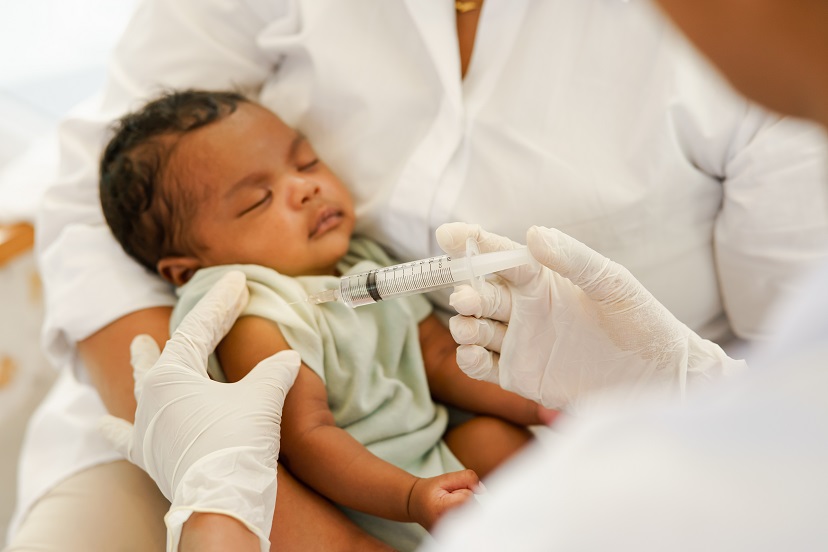
The AAP recommends that newborns begin their vaccine schedule within 24 hours of birth with the Hepatitis B (HepB) vaccine. This initial dose shields infants from a virus that can lead to lifelong liver disease, liver cancer, and early death if contracted during infancy. Babies born to mothers who are Hepatitis B-positive or whose status is unknown should also receive hepatitis B immune globulin (HBIG) for additional protection. The AAP stresses that the birth dose is a vital safety measure, especially since parents or caregivers may unknowingly carry the virus. Newborn vaccination also underscores an important principle: Early protection is essential. Infants are highly vulnerable to infections, and vaccines help protect them during their first months of rapid growth, when complications can be more severe.
The First Year: Building Strong Immunity.
As babies grow, the AAP recommends a series of vaccines during routine well-child visits, usually at 2, 4, 6, and 12 months. These vaccines help protect against serious diseases like whooping cough, measles, polio, meningitis, pneumonia, influenza, and rotavirus. Some parents worry about giving multiple vaccines at once. However, the AAP explains that infants’ immune systems are designed to respond safely to many challenges, and spreading out vaccines unnecessarily leaves children unprotected.
Toddler, Preschool, and School-Age Vaccines.
Between ages 1 and 6, booster doses strengthen the immunity developed earlier in life. Vaccines during this period protect against measles, mumps, rubella, chickenpox, diphtheria, tetanus, pertussis, and more. These boosters are essential because immunity can diminish over time, and school-aged children are exposed to more social environments where infections can spread easily. Starting at 6 months, the AAP recommends the annual influenza vaccine, as flu strains change each year and can lead to serious complications in children.
Vaccines for Preteens and Teens.
As children enter adolescence, the AAP recommends additional protection, including vaccines for HPV, meningococcal disease, and Tdap boosters. These vaccines protect against cancers, serious bacterial infections, and whooping cough—conditions that can be very dangerous in teens, even though they are less well known.
What Should Parents Do When They Feel Confused?
The AAP recommends that parents consult their pediatrician, who follows the organization’s evidence-based schedule and can tailor advice for children with chronic conditions or developmental delays. The AAP also advises families to rely on trusted, child-focused resources such as HealthyChildren.org rather than online comments or scattered guidance.
Local pediatrician and Erie County Health Commissioner, Gale Burstein, MD, MPH, FAAP, says, “Despite confusing public debates, AAP guidance has remained consistent: Follow the childhood immunization schedule recommended by AAP, start with the HepB birth dose, and keep up with well-child visits. Vaccines continue to be one of the safest and most effective tools for ensuring every child grows up healthy, protected, and prepared to thrive.”
The New York State Department of Health (NYSDOH) has also reaffirmed the long-standing hepatitis B vaccination recommendations for infants and children. New York’s evidence-based recommendations continue to include a hepatitis B vaccine birth dose for every newborn, without delay, as well as completion of the vaccine series in infancy. For more information, see https://tinyurl.com/yhtf7wpb or https://tinyurl.com/m9vr5bds.