ECMC Brings Advanced Robotic Treatment for Enlarged Prostate to Western New York
by Annette Pinder
For many men, frequent trips to the bathroom, interrupted sleep, difficulty starting urination, or a sensation that the bladder never fully empties can gradually become part of everyday life. Often, the cause is benign prostatic hyperplasia (BPH), commonly known as an enlarged prostate.
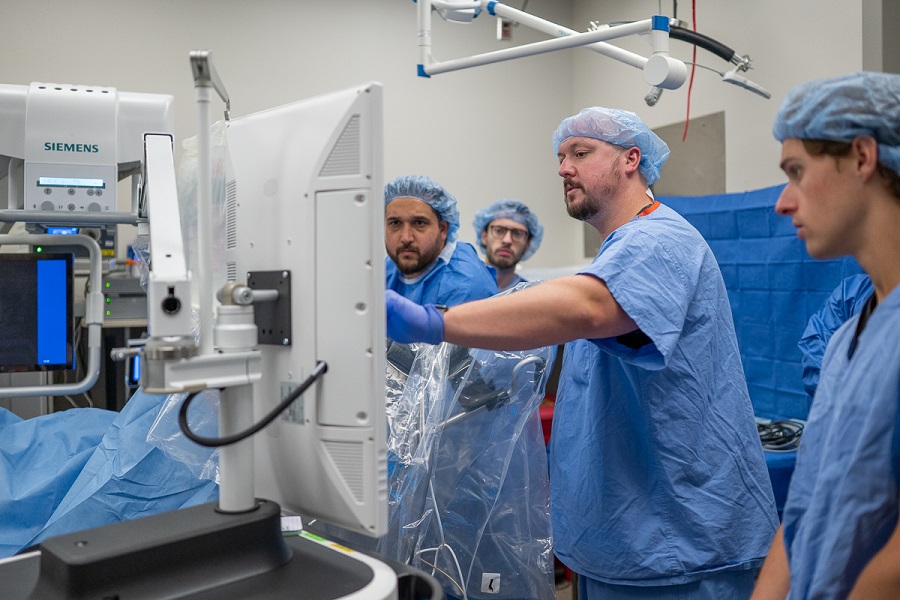
Men in Western New York now have access to a new treatment option. Erie County Medical Center (ECMC) is the first healthcare institution in the region to offer Aquablation® therapy with the new HYDROS™ Robotic System, a next-generation robotic platform for treating BPH. ECMC urologist Eric Chevli, MD, recently performed the hospital’s first procedures with the system.
BPH becomes increasingly common as men age. About half of men ages 51 to 60 have the condition. As the prostate enlarges, it can press against the urethra, interfering with the normal flow of urine. Symptoms may include frequent or urgent urination, waking repeatedly at night to urinate, a weak urine stream, difficulty starting urination, and the sensation that the bladder has not fully emptied. Although BPH is not cancer, severe cases that go untreated can lead to complications, including bladder or kidney damage, bladder stones, urinary retention, and incontinence.
“BPH is a widespread condition that severely compromises quality of life for countless men over age 50,” says Samuel Cloud, MD, ECMC’s Chief Medical Officer. “With Aquablation therapy, men can reclaim their lifestyles and find symptom relief while preserving sexual function and continence.”
Aquablation offers a different approach from procedures that rely on heat generated by lasers or electrical energy. Instead, it uses a precisely controlled, heat-free waterjet to remove prostate tissue obstructing urinary flow. Before treatment begins, the surgeon uses real-time ultrasound imaging and digital cystoscopy to obtain a detailed view of the prostate. A personalized treatment plan identifies which tissue to remove and which areas to preserve. The robotic system then follows the surgeon-defined plan, directing the waterjet to remove obstructive tissue while helping protect structures important to urinary continence and sexual function.
The HYDROS system represents the latest generation of Aquablation technology. Developed from experience gained through more than 50,000 Aquablation procedures, it incorporates AI-assisted treatment planning, advanced imaging, and robotic guidance to help surgeons tailor treatment plans to each patient’s anatomy.
The technology may be especially meaningful for men who have postponed BPH treatment due to concerns about sexual or urinary side effects associated with some traditional procedures. Five-year clinical data show that Aquablation therapy can provide significant, durable improvement in BPH symptoms while preserving continence and sexual function in many patients across a broad range of prostate sizes and shapes.
For men who find themselves planning activities around bathroom availability, losing sleep due to frequent nighttime urination, or simply accepting troublesome urinary symptoms as an unavoidable part of getting older, it may be worth discussing treatment options with a urologist.
To learn more about Aquablation therapy at ECMC, call 716-898-5411 or visit ecmc.edu and search for “Urology.”