Have UB Biologists Found the Key to Treating Autism?
By Annette Pinder
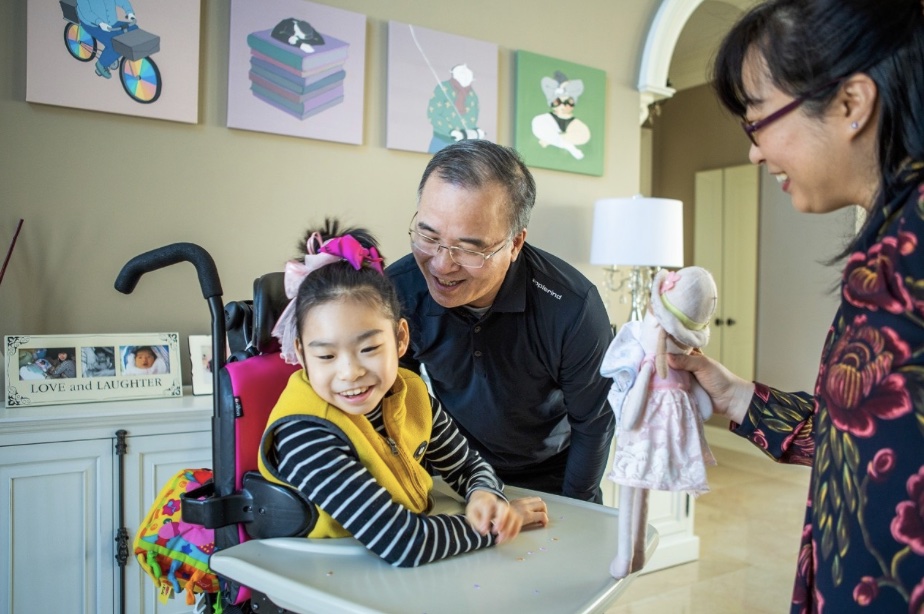
A drug developed at the University at Buffalo to treat FOXG1 syndrome has been approved by the U.S. Food and Drug Administration (FDA) for clinical trials. The FDA-approved drug, FRF-001, is a viral gene therapy that targets the underlying genetic cause of FOXG1 syndrome, a rare neurodevelopmental disorder characterized by cognitive and physical disabilities and epilepsy. It was developed by UB biologists Soo-Kyung and Jae Lee, who oversee the FOXG1 Research Center at UB and whose daughter was born with FOXG1 syndrome.
Reaching a clinical trial reflects the extraordinary commitment of the FOXG1 community, the families who never stopped believing, and the incredible support we’ve received from UB,” says Soo-Kyung Lee, PhD, SUNY Empire Innovation Professor and the Om P. Bahl Endowed Professor in the UB Department of Biological Sciences, and director of the FOXG1 Research Center. This clinical trial is an important step toward turning their hope into real therapies.
FOXG1 syndrome is caused by mutations in an essential gene involved in early brain development. While the mutation is rare—affecting one in 30,000 people worldwide—the gene has been linked to autism spectrum disorder and certain cancers, suggesting that FOXG1 therapies could possibly help treat more common conditions.
The Lees demonstrated that their drug can reverse some brain abnormalities in mice with FOXG1 syndrome, including those in regions linked to language, memory, and social interaction. It achieves this by delivering a functional copy of the FOXG1 gene using an adeno-associated virus 9 (AAV9) vector, making it the first FOXG1 AAV9 gene replacement therapy. The Lees’ daughter, Yuna, was diagnosed with the disorder in 2012 at age 2. The couple, whose previous research focused on master regulator genes, has since dedicated their careers to studying the disorder. They joined UB in 2019 and launched the FOXG1 Research Center at UB in 2024, with support from the UB Office of Research, Innovation, and Economic Development and the FOXG1 Research Foundation. They are also assisted by UB’s Business and Entrepreneur Partnerships, which are working to secure a patent for the drug, negotiate licensing agreements, and provide other support services.
The first-in-human clinical trial will take place across multiple sites and is sponsored by the FOXG1 Research Foundation, which has raised $14.5 million so far through its “Yes, They Can” campaign to advance FRF-001 through patient clinical trials and regulatory approval. It is believed to be the first case of a parent-led, nonprofit organization for a rare disease independently sponsoring its own multi-site, international gene therapy trial.
“As both scientists and parents of a child with FOXG1 syndrome, this milestone is very personal to us,” says Jae Lee, PhD, professor of biological sciences. “It brings hope not only for our daughter but also for all children and families affected by this devastating neurodevelopmental disorder.”
UB is hosting a free symposium in honor of Soo’s work on Friday, April 24 and Saturday, April 25, featuring many renowned autism researchers, as well as a musical performance on Friday night. Friday’s event begins at 2:45 pm. Saturday’s event begins at 8 am. Learn more and register at go.buffalo.edu/ss.