
How School Meals Lift Students for Success
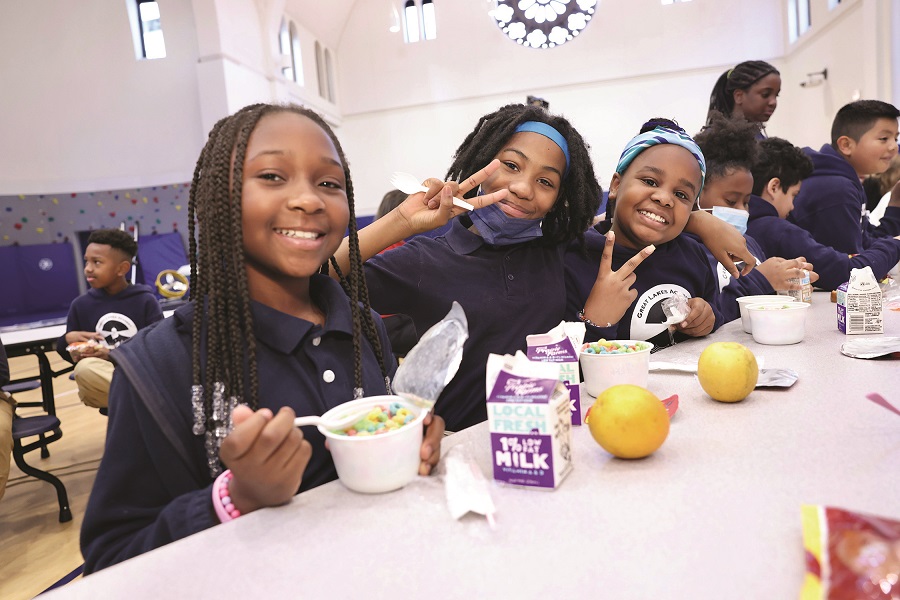
Food insecurity among children in the United States is a severe but often overlooked crisis affecting millions of young lives. In fact, one in five kids face hunger or food insecurity, according to the U.S. Department of Agriculture (USDA), and data from Feeding America show that more than 13 million children in the United States live in “food insecure” homes. The New York Health Foundation found that approximately one in eight households with children in New York state experienced food insufficiency. A 2024 Feeding America report revealed the sharpest increase in food insecurity since the Great Recession for the Finger Lakes region, which is part of Western New York. Factors driving this rise in child hunger include rising food prices and economic instability, which continue to pressure families nationwide. Lack of nutritious food also significantly contributes to students missing school or struggling to stay engaged.
“Child hunger is more than a nutrition issue – it’s a silent crisis that deprives children of their ability to focus, learn, and thrive in the classroom,” says GENYOUth CEO Ann Marie Krautheim, MA, RD, LD. “Every child deserves to be nourished, supported, and prepared to succeed, and the solution begins with a commitment to our nation’s schools.”
GENYOUth’s second annual “Youth Hunger & School Meals” survey found that 86% of Americans believe going to school hungry significantly hinders a child’s ability to focus, concentrate, and perform academically. Food security is also connected to physical and emotional issues, such as headaches, stomachaches, increased anxiety and stress, and decreased self-esteem.
School Meals Are Essential for Learning.
American adults widely believe that solving hunger in the classroom begins with providing access to healthy school meals. Over 90% agree that students who eat breakfast regularly perform better in school. Most also recognize that starting the day well-fed offers kids an academic advantage, including better attendance and classroom participation. There is strong support for making school breakfast a standard part of the school day, rather than an optional addition. For nearly seven in 10, this is a priority.
Rallying Support to Ensure All Children Thrive.
School meals, relied upon by 30 million students for a large part of their daily nutrition, provide the milk, whole grains, fruits, vegetables, and lean protein students need to succeed, according to the School Nutrition Association. Nutrition security focuses on both the quality and quantity of food intake, highlighting the critical need for consistent access to healthy options. Innovative strategies, such as Grab and Go, Breakfast in the Classroom, and Second Chance Breakfast, have proven to be very effective in increasing access to, and participation in, nutritious school meals.
“In our survey, it is encouraging to see that many Americans recognize the link between school meals and student success,” Krautheim says. “To unlock each child’s potential to learn and succeed, we must improve school meals with innovative solutions and gather support from parents and community leaders. Let’s work together to ensure every child is nourished and ready to thrive.”
To learn more and access the complete survey results, visit GENYOUthnow.org.