
New Light Therapy Offers Hope for People with Dry Macular Degeneration
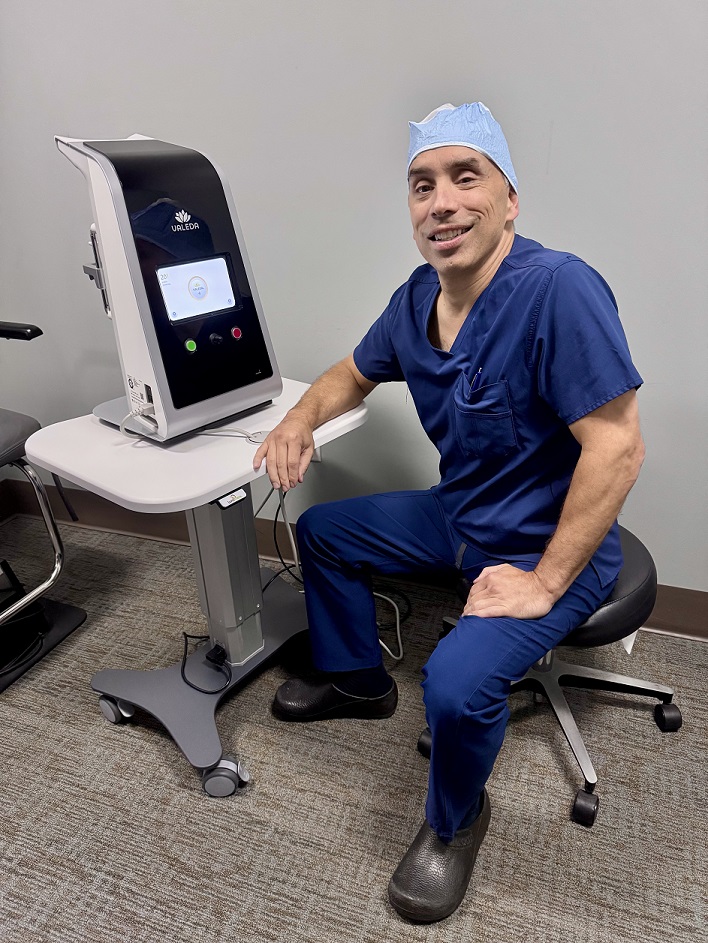
Fichte, Endl & Elmer Eyecare brings FDA-authorized Valeda treatment to Western New York
By Annette Pinder
For years, people diagnosed with dry age-related macular degeneration (AMD) often heard a frustrating message: Take recommended nutritional supplements, protect your eyes, and return regularly so your doctor can monitor the disease. Now, a new treatment available in Western New York offers some patients another option. Fichte, Endl & Elmer Eyecare recently introduced the Valeda® Light Delivery System, the first FDA-authorized photobiomodulation treatment for dry AMD.
AMD affects the macula, the central portion of the retina responsible for the detailed vision needed for reading, driving, and recognizing faces. Dry AMD is the most common form and generally progresses gradually as retinal cells deteriorate. “Until now, there has been very little we could actively do for many patients with dry AMD,” says Michael J. Endl, MD, of Fichte, Endl & Elmer Eyecare. “Valeda gives us a non-invasive treatment option aimed at helping patients preserve their vision.”
How can light help the retina?
Valeda uses photobiomodulation, delivering specific wavelengths of amber, red, and near-infrared light to retinal tissue. The light acts on mitochondria—the structures within cells that produce energy—to improve cellular function and support retinal health. Clinical research leading to FDA authorization found that patients treated with Valeda showed improved visual acuity compared with those receiving a sham treatment. Research also suggests the therapy may help slow the progression of some changes associated with dry AMD.
Treatment is surprisingly simple. Each session lasts less than 10 minutes and requires no injections, anesthesia, eye drops, or pupil dilation. Patients typically receive nine treatments over three to four weeks and can resume normal activities immediately afterward. Additional treatment courses may be recommended as needed.
Valeda does not cure macular degeneration and is not intended for wet AMD. It is designed for certain patients with dry AMD, so a thorough eye examination is important to determine who is an appropriate candidate. This also makes early detection particularly important. “With dry AMD, timing matters,” says Thomas R. Elmer, Jr., MD. “The earlier we identify it, the more vision we potentially have to protect.”
People over 60, especially those with a family history of macular degeneration, should have regular comprehensive eye exams. Anyone experiencing blurred or distorted central vision, difficulty recognizing faces, or straight lines that appear wavy should also seek prompt evaluation. For people who have already been told they have dry AMD, drusen, or early macular changes, Valeda may finally offer something new to discuss with their eye doctor.
To see if you are a candidate for Valeda and to schedule your appointment and learn more, visit Fichte, Endl & Elmer Eyecare at www.fichte.com or call 1-800-309-2020.