Better Hearing Is About More Than Hearing Aids
New research highlights the importance of professional audiology care
By Annette Pinder
Hearing aids have become smaller, more sophisticated, and increasingly accessible. Today, consumers can even buy over-the-counter (OTC) hearing aids without seeing an audiologist. But does buying a hearing aid guarantee better hearing? A 2025 study in JAMA Otolaryngology–Head & Neck Surgery suggests that how hearing aids are fitted and supported may matter more than the technology itself.
What Researchers Discovered.
Researchers from the University of Iowa and Vanderbilt University compared three approaches: comprehensive audiologist-led care, limited professional assistance with OTC-style hearing aids, and self-fitting without professional assistance. Among 245 participants who completed the study, those receiving comprehensive audiologist-led care reported significantly better overall outcomes than those in either OTC group. Researchers also compared higher-priced hearing aids with less expensive models and found no significant difference in patient-reported outcomes by technology level. The findings suggest that successful hearing care depends on more than purchasing sophisticated equipment.
Why Professional Care Matters.
Although researchers could not pinpoint which services accounted for the differences, they identified several possibilities that reflect the comprehensive approach used at Buffalo Hearing & Speech Centers (BHSC).
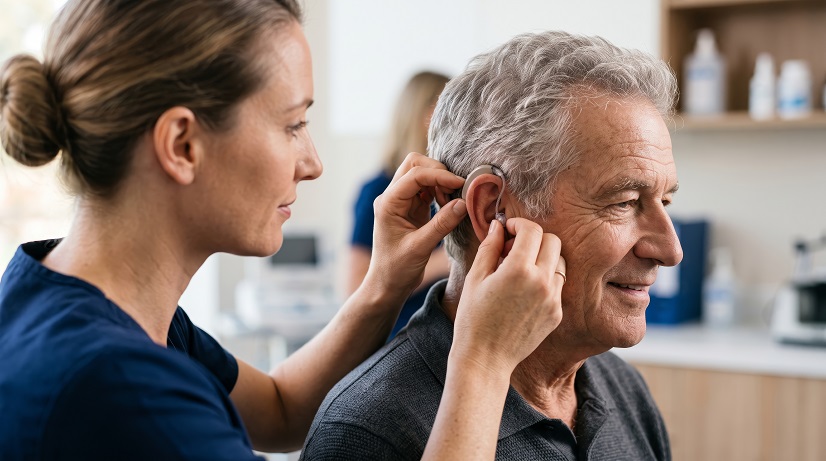
- Individualized Testing and Fitting. Hearing loss varies from person to person. Some individuals struggle with high-pitched sounds, while others have difficulty understanding speech in noisy environments. Audiologists assess hearing needs and recommend appropriate devices. Best-practice fitting includes real-ear verification, which measures sound levels inside the ear to ensure appropriate amplification rather than relying on preset settings.
- Greater Flexibility to Solve Problems. Hearing aids sometimes require adjustments. Whistling, uncomfortable volume levels, and difficulty understanding speech can interfere with successful use. Researchers found that limited OTC adjustments can make these problems difficult to resolve. Audiologists have greater flexibility to identify problems, customize programming, and improve comfort and performance.
- Ongoing Guidance and Support. Learning to use hearing aids takes time. Patients may need help adjusting to unfamiliar sounds, maintaining their devices, and adapting as their hearing needs change. At BHSC, comprehensive evaluations, individualized fittings, education, and ongoing support help patients achieve better hearing.
Hearing Well Means Living Well.
Amy Bamrick, M.S. Ed, CCC-SLP, Director of Clinic and Community Services at Buffalo Hearing & Speech Centers, emphasizes the broader importance of addressing hearing loss. She says, “At BHSC, we believe that ‘well-hearing is well-being.’ Treating hearing loss can positively impact your social-emotional, cognitive, and physical well-being by keeping you connected and helping you enjoy the sounds of life to the fullest!”
Making an Informed Choice.
OTC hearing aids can benefit adults with perceived mild-to-moderate hearing loss. However, this study suggests that comprehensive professional care can lead to better patient-reported outcomes. The takeaway is simple: The most valuable investment may not be the most expensive hearing aid but the professional expertise and ongoing support that help it work effectively.
Learn more about BHSC’s audiology services at askbhsc.org/audiology or by calling 716-885-8318.