Finding Brain Aneurysms Before They Rupture
A Blood Test Developed by Buffalo Researchers
by Annette Pinder
Nearly 18 years ago, Buffalo native and entrepreneur Jeff Harvey lost his wife, Carol, to an undetected brain aneurysm. Since then, Harvey has supported the Brain Aneurysm Foundation (BAF) and established the Carol Harvey Memorial Chair of Research grant. His commitment to early detection brought him together with University at Buffalo researchers Vincent Tutino, PhD, and Hui Meng, PhD, and helped launch Buffalo-based Neurovascular Diagnostics in 2016.
Neurovascular Diagnostics brings together expertise across neurovascular research, medicine, engineering, data science, and business. Its team includes Tutino, CEO; Kerry Poppenberg, PhD, chief scientific officer; Harvey, chief financial officer; Kenneth Snyder, MD, PhD, chief medical officer; Meng, co-founder; and Charles Allen Smith, data scientist. Together, they are pursuing an ambitious goal: to develop a relatively low-cost blood test to help identify people with brain aneurysms before a devastating rupture.
Finding a Silent Threat.
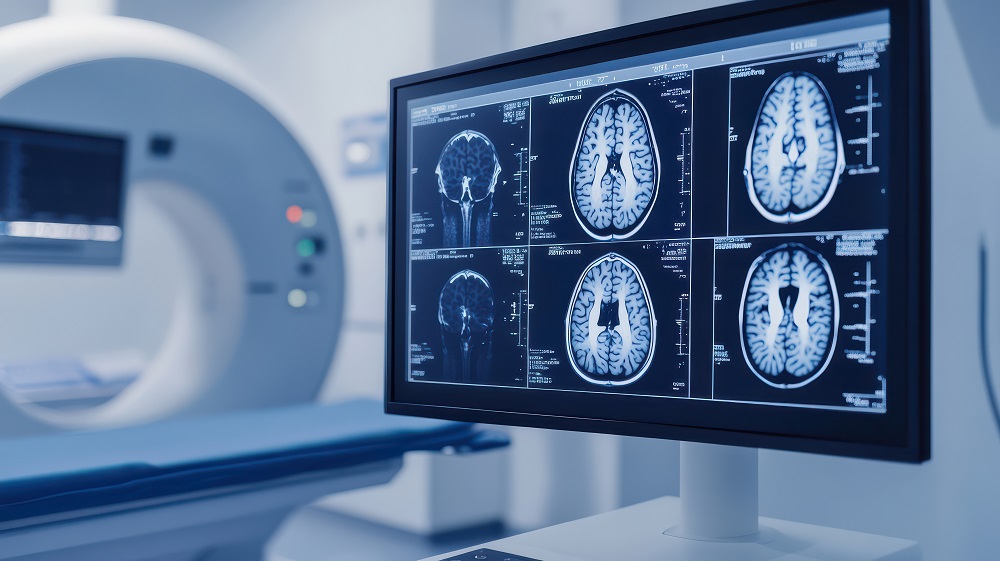
Most people with a brain aneurysm don’t know they have one. Because screening everyone with medical imaging is neither practical nor cost-effective, Neurovascular Diagnostics is developing AneuScreen™, a blood-based test to identify people who may have an unruptured brain aneurysm and who should undergo further imaging evaluation.
Over the past decade, researchers have studied blood biomarkers and identified patterns of gene activity linked to intracranial aneurysms. Building on that work, they developed a patent-protected gene panel to detect aneurysms. In a study of about 500 patients, the researchers reported encouraging results. The researchers are also developing AneuScreen, which is designed to predict not only whether someone has an aneurysm but also how dangerous it may be, helping physicians decide which aneurysms require treatment and which can be safely monitored. Recent research grants are helping the team investigate biological signatures in circulating immune cells associated with rupture-prone aneurysms.
Neurovascular Diagnostics expanded its research with Baptist Health in Jacksonville, Florida, to study individuals and families with a history of aneurysms. The research combines blood testing, genetic information, and MRA imaging to better understand inherited risk. People at increased risk include those with a family history of brain aneurysm, smokers, people with high blood pressure, women (especially those who are postmenopausal), and individuals who have had one or more aneurysms.
What is Your Health and Family History, and Can This Test Help You?
Neurovascular Diagnostics is building a database of individuals affected by brain aneurysms, those with a family history or other risk factors, and people interested in its research. The information will help researchers build a community to contact about future studies and testing opportunities as their research progresses and when the test receives FDA approval. November is Family History Month, a great time to learn about your family history and share it with your health provider. For Tutino and his colleagues, the long-term goal is straightforward but potentially transformative: to make identifying brain aneurysms easier, more affordable, and more accessible before they rupture.
Partners of Neurovascular Diagnostics include America’s Seed Fund, Brain Aneurysm Foundation, UB Neurosurgery, University at Buffalo, and UB’s Canon Stroke & Research Center. Sign up for a future clinical study and learn more at www.bafound.org and https://www.nvdiag.com.