
A Nobel Prize Discovery That Could Transform Mental Health Treatment
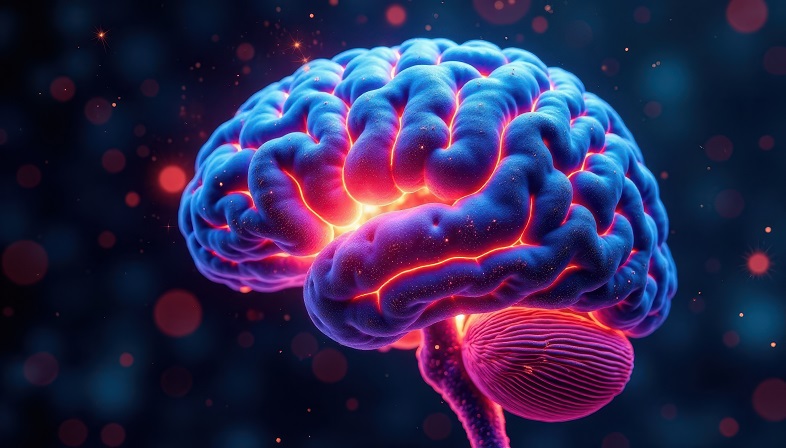
How a psychiatrist’s groundbreaking research is opening new possibilities for treating brain disorders
By Annette Pinder
Imagine being able to identify the precise brain cells responsible for certain emotions, behaviors, and neurological disorders—and potentially develop treatments that target those cells. What once seemed like science fiction is becoming increasingly possible, thanks to research recognized by the 2026 Nobel Prize in Physiology or Medicine.
On October 5, Stanford University psychiatrist and neuroscientist Karl Deisseroth, MD, PhD, was awarded the Nobel Prize alongside German scientists Peter Hegemann and Georg Nagel for discoveries that revolutionized our understanding of the brain. Their breakthrough involves a technology called optogenetics, which allows scientists to use light to activate or deactivate specific nerve cells.
How Does It Work?
The discovery began with an unlikely source: microscopic green algae. Researchers discovered that certain proteins in these organisms respond to light by generating electrical signals. Deisseroth and his colleagues found a way to introduce these light-sensitive proteins into nerve cells, allowing scientists to control their activity using precisely directed light. For the first time, researchers could investigate how individual brain circuits influence emotions, memories, movement, and behavior.
Why Is This So Important?
For decades, treating psychiatric and neurological disorders has been challenging because scientists have struggled to understand precisely which brain circuits contribute to particular symptoms. While medications help millions of people, they don’t work for everyone and can sometimes produce significant side effects.
Optogenetics gives researchers a powerful way to investigate the biological mechanisms underlying depression, anxiety, bipolar disorder, schizophrenia, addiction, Parkinson’s disease, and Alzheimer’s disease. By identifying the brain circuits involved, scientists hope the knowledge gained will ultimately lead to more precise and effective treatments.
The Nobel recognition also carries an important message beyond the laboratory. Serious mental illnesses are medical conditions involving extraordinarily complex brain biology—not weaknesses of character or failures of willpower. Honoring a psychiatrist with medicine’s highest scientific distinction underscores the importance of understanding and treating diseases of the brain with the same scientific rigor applied to diseases elsewhere in the body.
Could This Save Lives?
Potentially, yes. Depression and other serious psychiatric disorders can be disabling and sometimes life-threatening. A better understanding of the brain circuits involved could eventually lead to more effective treatments, particularly for people who have not responded to existing therapies. Researchers are also exploring applications involving epilepsy, movement disorders, and restoring vision in certain forms of blindness.
Importantly, optogenetics remains primarily a research tool. Its direct use in treating psychiatric disorders is not yet established, and significant scientific and safety challenges remain. Still, this Nobel Prize represents something extraordinary: a new ability to understand the brain at a level of precision previously unimaginable. For millions of people affected by mental illness and neurological disease—and the families who love them—that progress offers genuine hope for the future.
Learn more at https://www.nobelprize.org/prizes/medicine/2026/press-release and https://news.stanford.edu/stories/2026/10/karl-deisseroth-nobel-prize-physiology-medicine.
Article Sources: Nobel Assembly at Karolinska Institutet, October 5, 2026; Stanford University School of Medicine; American Psychiatric Association, Psychiatric News; Nature, October 2026.