
Don’t Just Buy a Hearing Aid
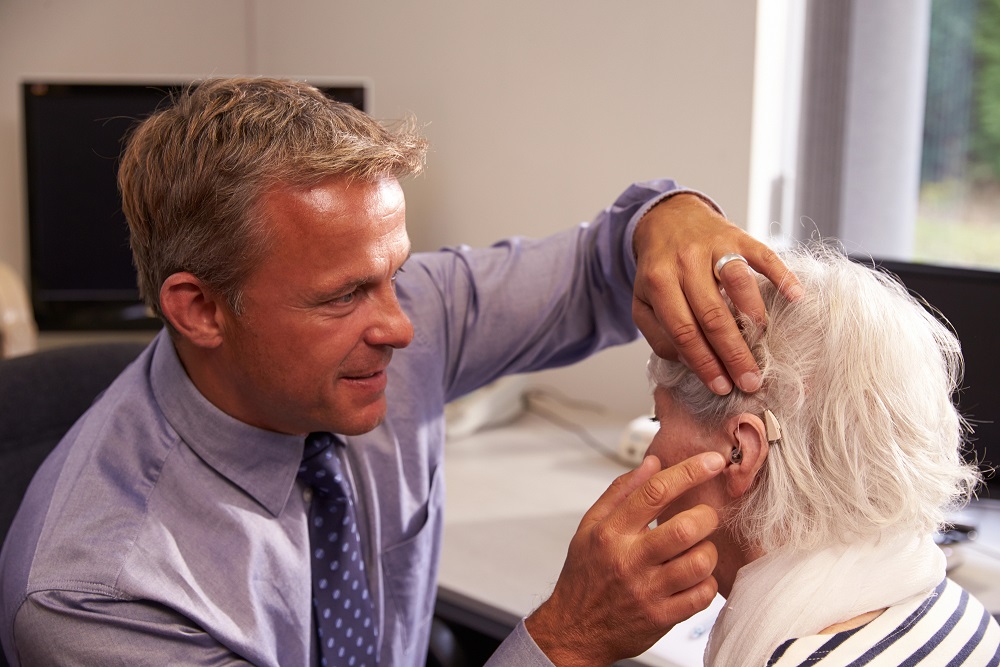
A new category of hearing aids, referred to as OTC (over-the-counter) hearing aids, is now widely available. They are intended to help adults with perceived mild-to-moderate hearing loss. According to the National Institutes of Health, OTC hearing aids make sounds louder and can help some people with hearing difficulty listen and communicate more effectively. However, OTC hearing aids available in stores or online require that you fit them yourself. Some give you the ability to control and adjust them, while others do not. They also may not look like today’s hearing aids.
Marie T. Ryan, MA, CC/A, Audiology Supervisor at Buffalo Hearing & Speech Center, says, “Basically, OTC hearing aids are an alternative to FDA-regulated hearing aids available from hearing health professionals, such as audiologists, otolaryngologists (ear, nose, and throat doctors), and hearing aid specialists. Whereas a hearing health professional can fit you for a hearing aid, adjust it based on your hearing loss, and provide other services, OTC hearing aids do not require a hearing exam.”
It is important to know that OTC hearing aids are not intended for adults with severe hearing loss, significant difficulty hearing, or a need for higher levels of sound amplification. So, how do you know if you have mild-to-moderate hearing loss, severe hearing loss, or a condition that requires urgent attention?
Mild-to-moderate hearing loss:
- The speech or sounds you hear seem muffled.
- You have trouble hearing when you’re in a group, in a noisy area, on the phone, or when you can’t see who is talking.
- You have to ask others to speak more slowly or more clearly, to speak louder, or to repeat what they said.
- You turn up the volume higher than other people prefer when watching TV, listening to the radio, or listening to music.
Severe hearing loss:
- You have difficulty hearing conversations in quiet settings.
- You have difficulty hearing loud sounds, such as cars or trucks, noisy appliances, or loud music.
Problems requiring immediate treatment:
- Fluid, pus, or blood coming out of your ear within the previous six months.
- Pain or discomfort in your ear.
- A history of excessive earwax or suspicion that something is in your ear canal.
- Episodes of vertigo (severe dizziness) with hearing loss.
- Sudden hearing loss or quickly worsening hearing loss.
- Hearing loss that has gotten more and then less severe within the last six months.
- Hearing loss or tinnitus (ringing) in only one ear, or a noticeable difference in how well you can hear in each ear.
Hearing loss significantly affects the quality of life for millions of adults in the U.S. Without treatment, hearing loss can lead to isolation, depression, anxiety, and low self-esteem. To learn more, visit Buffalo Hearing & Speech Center at www.askbhsc.org, or call 716-885-8318 to schedule a hearing test and hearing aid evaluation.