Mechanism‑Driven Strategy for Targeting p53‑Mutant Cancers
Two‑step approach reveals a fundamental vulnerability in one of cancer’s most common mutations
- New approach exploits core biological weakness of p53‑mutant cancer cells
- Two‑drug strategy improves selectivity while reducing toxicity risk
- Findings shared in oral abstract session at AACR Annual Meeting
BUFFALO, N.Y. and SAN DIEGO — Scientists from Roswell Park Comprehensive Cancer Center have developed a two‑step therapeutic strategy designed to selectively eliminate tumors driven by mutations in the TP53 gene. In a talk at the American Association for Cancer Research (AACR) Annual Meeting in San Diego, the scientists outlined this new approach to overcoming a defining genetic alteration responsible for more than half of human cancers.
While the TP53 gene acts as a critical safeguard that prevents damaged cells from growing, a damaged, “mutant” version of the p53 protein is known to promote tumor progression and resistance to standard therapies. While efforts to directly target p53 have been limited by poor selectivity and high toxicity, the new Roswell Park strategy addresses this challenge by identifying a mechanism‑based drug combination that exploits the unique response defects of p53‑mutant cells.
Because TP53 mutations are found in many common cancers — including some lung, breast, colorectal, ovarian and pancreatic cancers — the new research could have relevance for treating a wide range of cancer tumors.
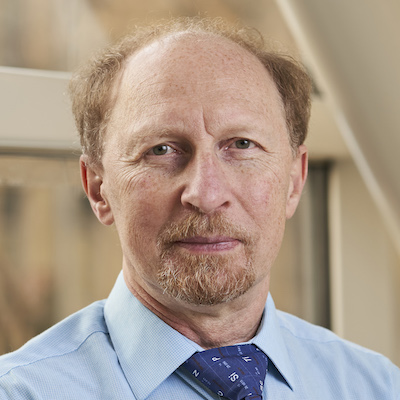
“We know that p53 mutations have the ability to completely reprogram how cancer cells respond to DNA damage,” says Andrei Bakin, PhD, Professor of Oncology in the Department of Cancer Genetics and Genomics at Roswell Park, who led the work as senior author and presented the findings in an invited April 21 talk at AACR 2026. “Our findings show that this altered response can be used as a therapeutic liability, rather than an obstacle.”
The strategy incorporates two coordinated steps. First, a thymidine analogue primes p53‑mutant cells by inducing post‑replicative DNA breaks that these cells are poorly equipped to resolve. While normal cells retain functional p53‑dependent checkpoints, p53‑mutant cells accumulate damage. The second step then blocks the G2 checkpoint, a critical survival mechanism in p53‑deficient cells, leading to selective cell death.
The team explains the fundamental mechanism underlying the cooperative action of these two drugs, providing a strong rationale for further development and clinical translation in p53‑mutant cancers.
“This study defines a highly effective two‑step therapeutic strategy for cancers harboring mutant p53. By separating DNA damage induction from checkpoint inhibition, we overcome major limitations that have hindered prior approaches — notably, poor selectivity and dose‑limiting toxicity,” says Dr. Bakin.
This new treatment strategy is being developed through a clinical trial (NCT04511039) now underway at Roswell Park under the leadership of principal investigator Christos Fountzilas, MD, FACP, in patients with some forms of colorectal or gastroesophageal cancer.
Study first author Mohammed Alruwaili, PhD, now of Northern Border University in Arar, Saudi Arabia, contributed to this work during his graduate training at Roswell Park.
Presentation details
- Presenter: Andrei Bakin, PhD, Roswell Park Comprehensive Cancer Center
- Presentation: Invited talk, Abstract #6762, “A novel therapeutic approach for targeting p53-mutant cancers by leveraging DNA damage response vulnerabilities”