Grant-funded UB Research to Analyze Women’s Digital Safety

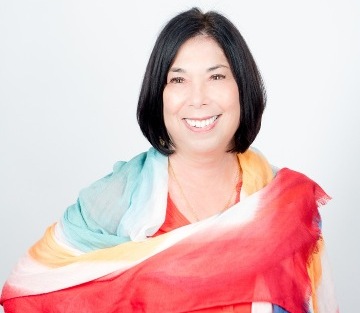
BUFFALO, N.Y. — A $90,911 grant from the Gates Foundation will fund a study co-led by Nadine Shaanta Murshid, PhD, associate professor in the University at Buffalo School of Social Work, to analyze the risks women face in digital spaces.
The project, which will be run out of the BRAC University Institute of Governance and Development (BIGD) in Bangladesh, aims to develop the first scientifically validated measure of women’s digital safety in Bangladesh and other low- and middle-income countries. Murshid’s research team also includes Imran Jamal, PhD, and Sheikh Touhidul Haque, PhD, both of BIGD.
“On one hand, digital technologies allow for economic participation, mobility and access to services. But that comes with the risk of online harassment, financial fraud and relational surveillance,” Murshid says. “How do these risks limit women’s ability to leverage digital platforms to get these benefits?”
That’s one question Murshid plans to answer through this multi-phase study.
“What’s out there already focuses on the more spectacular forms of digital violence, like bullying and harassment,” she says. “We’re trying to get a more holistic look at the digital landscape that includes more everyday, mundane forms of digital unsafety and risk.”
To start, the team will interview at least 100 women from diverse backgrounds in Bangladesh, including stay-at-home mothers, domestic workers, garment factory workers, small-business owners and highly educated professionals. They want to learn how these women access and use mobile phones, the internet and digital platforms — and what feels safe, or not, to them in these spaces.
“Digital safety is a concern everywhere — look at any comment section on Facebook, and there will be a lot of anti-women messaging,” Murshid says. “The difference, for poor women in poor countries, is in terms of access. They may have shared phones, and so that increases the risk of partner surveillance or another person accessing your accounts. It’s not just the woman’s skills; it’s the people who are sharing her phone and their skills too.
“As mobile phone and smartphone saturation increases, it creates a new problem of digital literacy,” Murshid continues. “To what extent are people able to protect themselves? And then, how do they cope, emotionally, if they do experience harassment on a platform? That’s where my social work lens comes in.”
After the initial interview, the subjects will receive logbooks to document their digital experiences and return for a follow-up interview to dig into their notes.
Finally, the researchers will use this data to develop the Digital Safety and Risk Scale to capture women’s digital safety and risk exposure. In the study’s final phase, they will test and validate the scale with a sample of about 600 additional women and share it with stakeholders, like NGOs, which can implement it with clients using their services.
Ultimately, they hope their findings can inform gender-responsive digital policies, digital literacy and safety programming, and platform- and community-level interventions.
“People spend so much time in digital spaces now, and so whatever happens in those spaces affects your mental and physical health. Digital safety and physical safety are connected — they’re not separate,” Murshid says. “With this study, we’re trying to get a holistic look at digital life and make sense of whether people are safe there and, if not, what can be done to make it better.”