Over $600K Awarded to Advance East Side Health Equity
Funding came from a major federal grant awarded to UB’s Community Health Equity Research Institute
BUFFALO, N.Y. – Workforce training for the building trades. Rejuvenating community gardens to grow food. Repairing damaged homes. Training youth leaders. Addressing vaccine hesitancy. Developing a culturally-tailored pregnancy app for African American women and their families.
These activities and more, driven by East Side community organizations and by University at Buffalo researchers, have received funding from UB’s Community Health Equity Research Institute (CHERI). All are designed to help address the social determinants of health that negatively impact the lives of East Side residents.
Funding was provided through a grant awarded to CHERI by the National Institute for Minority Health and Health Disparities, part of the National Institutes for Health. The grant, which was announced in 2024, is titled “Igniting Hope in Buffalo, New York Communities: Training the Next Generation of Health Equity Researchers.” It established UB’s Center of Excellence in Investigator Development and Community Engagement.
The center is focused on training early career researchers across all disciplines to use their expertise to mitigate social determinants of health.
“This award is exactly the kind of investment health equity work needs,” says Heather M. Gardiner, PhD, director of CHERI.“It doesn’t just fund research, it funds community groups and organizations who are equally committed to eliminating health inequities on the East Side and across the region.
“Importantly, the funding promotes authentic, meaningful community-academic partnerships, which we know lead to solutions that are co-created by the communities they are meant to serve, making them more relevant, appropriate, useful and impactful than those created using traditional research approaches,” she continues.
Gardiner is professor and Carl V. Granger Endowed Chair in Health Equity in the Department of Family Medicine in the Jacobs School of Medicine and Biomedical Sciences at UB.
The grant funds community projects and pilot studies, both geared toward addressing a wide range of social determinants of health.
The following community organizations have received grants:
- Back to Basics Ministries will begin renovations on a badly damaged home of a longtime East Side resident. This is part of the East Side Neighborhood Transformation Project.
- Body of Wealth Fitness Studio will track metrics of neighborhood participants to demonstrate how physical activity and nutritional education impact overall health.
- The W.I.N. Initiative (We’re Improving Now) will empower East Side activists and organizations by providing research skills and education on data collection to improve advocacy efforts.
- Every Bottom Covered, the region’s only diaper bank, will refine data collection and analysis to enhance impact and better support families in need.
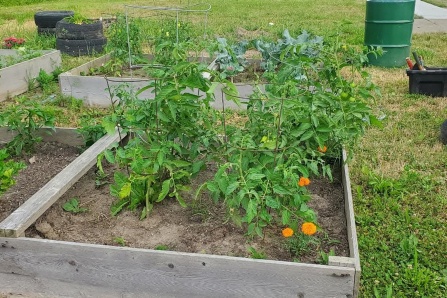
- King Urban Life Center will rejuvenate its community gardens to increase fresh food access and establish a new garden on a vacant lot.
- SOAR 4 Solutions, Inc. will promote youth leadership for teens amplifying youth voices to promote wellness and engage in community-driven action.
- St. James House of Prayer will expand by 50% the number of residents to which it delivers food, and hold community activities to provide health education to residents.
- East Side Development Corp. will prepare new housing proposals for the New York State Block by Block grant program that develops single-family and duplex homes on vacant lots.
- Future Hope Apprenticeship and Recovery Program is a workforce training program that will teach local residents the skills needed to succeed in the building trades.
- Adversity Builds Character, Inc. will train young men as health equity ambassadors to hold workshops to share information about the social determinants of health and how the community can mitigate them.
The pilot studies program provides seed funding for early career researchers from health care disciplines and non-health care disciplines who will engage in “community-based participatory research,” where community members help design, plan and conduct the study. The ultimate goal of the pilot studies is to obtain preliminary data that can be submitted as part of future applications for major federal funding that will ensure the research has a lasting impact on the community.
Pilot studies awarded funding are:
- Cultivating youth leadership to promote bystander cardiopulmonary resuscitation education in school and community settings. The study will integrate youth as trainers into sustainable programs partnering with Buffalo Public Schools and Say Yes Buffalo to expand CPR training in underserved communities.
- Embedding community health workers in pediatric clinics to address root causes of health inequities. This work will address critical gaps in pediatric health care by targeting social determinants of health, which disproportionately affect children in low-resource communities.
- Community-based approach to multi-level mental health promotion among elementary school students in Buffalo. The project will help develop effective, evidence-based and system-focused mental health interventions for Black youth.
- Support African American pregnant women in low socioeconomic status communities through cultural- and racial-tailored collaborative pregnancy tracking technology. This study will advance maternal health equity by developing a culturally and racially tailored collaborative pregnancy tracking technology designed to enhance the pregnancy outcomes of African-American women in low-socioeconomic status communities.
- Developing an AI agent to support post-discharge care among older African American adults with heart failure. This study will advance health equity by reducing barriers to health literacy during care transitions by implementing a user-centered, culturally-tailored and health literacy sensitive health literacy agent.
- Evaluating the impact of community-based mindfulness and musical programs on psychiatric measures in children. It will serve as a proof of concept that the music-mindfulness program can be implemented successfully and is highly promising for reducing attention deficit hyperactivity disorder and anxiety symptoms in underserved youth.
- Cultural and racial bias training for local opioid use disorder health care providers. This project will address major racial disparities regarding who receives opioid use disorder treatment and to study and provide cultural awareness and racial bias training to opioid use disorder providers and to track progress over time.
- Bridging health care and community systems to reduce vaccine hesitancy among socially vulnerable populations within Western New York. The study will develop a scalable model that integrates health care delivery, including vaccinations, in trusted community settings serving socially vulnerable populations.